![Logo [with tagline]-38](https://talkingdistance.com/wp-content/uploads/2025/03/Logo-with-tagline-38-300x138.webp)
⏰ Read time : 4 mins
The Emotional Reality of Being Stuck Abroad During Crisis
In moments of global crisis, the headlines often focus on borders, evacuations, and logistics. But behind those headlines are people quietly navigating an emotional landscape that is far more complex than what we see on the news. Right now, many Indians living or studying abroad are finding themselves in exactly that space — physically safe in some ways, yet emotionally suspended. Waiting. Watching. Refreshing the news. Checking flights. Messaging family back home. Trying to figure out what the next few days or weeks might look like. And while the practical concerns are real, there is another layer that often goes unnamed: the psychological experience of being far from home when the world feels uncertain.
The Emotional Whiplash of Uncertainty
When situations change rapidly, the nervous system struggles to keep up. You may notice your mind constantly scanning for updates. You may feel a mix of fear, frustration, helplessness, and even guilt — especially if loved ones back home are worried about you. Some people find themselves glued to the news; others avoid it entirely. Both responses are understandable. Uncertainty activates our survival instincts. The brain wants clarity, timelines, and answers. But crises rarely offer those things immediately. The result is a feeling many people describe as emotional whiplash — moving between hope, anxiety, patience, and exhaustion all within the same day.
The Unique Experience of Being Far From Home
Being abroad during a crisis carries its own emotional texture. Home is not just a physical place. It’s a psychological anchor. It’s where people instinctively imagine safety, familiarity, and support. When returning home suddenly becomes uncertain or delayed, it can create a subtle sense of disorientation. You may find yourself thinking: I should be able to go home right now, why does everything feel out of my control?, how long will this last? This feeling isn’t weakness. It’s the mind responding to a disrupted sense of safety and predictability.
The Invisible Pressure to “Stay Strong”
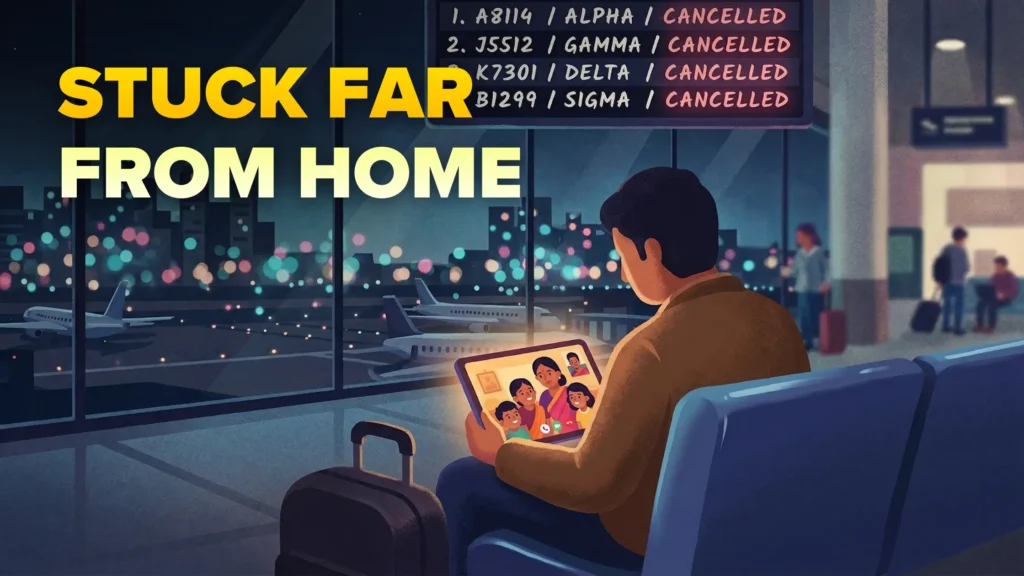
Another experience many people abroad report during crises is the pressure to appear calm for others. You might be the one reassuring family members on video calls. Telling them you’re okay. Downplaying your fears so they don’t worry. But emotional strength doesn’t mean suppressing what you feel. In fact, acknowledging your emotional reality is often what allows you to navigate it with more clarity. Anxiety, frustration, homesickness, and exhaustion can all coexist with resilience. Strength and vulnerability are not opposites — they often travel together.
Understanding What Your Mind Is Trying to Do
Our minds are wired to seek control during uncertain situations. When control isn’t possible, the brain often shifts to different kinds of coping mechanisms which may look like overthinking, constantly checking the news, planning what to do in case of a worst case scenario, and other visceral experiences such as emotional numbness. These reactions are not signs that you are “not coping well.” They are the mind’s attempt to create safety in a situation that feels unpredictable. Recognizing this can be grounding. It reminds us that our reactions are human.
Small Anchors in an Uncertain Moment
While you may not be able to control travel timelines or external events, there are still small psychological anchors that can help regulate your internal world. These might look different for everyone. These are not solutions to the situation itself — but they are ways of caring for your mind while you move through it.
The Quiet Resilience of Waiting
Waiting is often underestimated as a psychological challenge. We tend to value action, decisions, and solutions. But sometimes the hardest thing is simply sitting with uncertainty. And yet, waiting is also where resilience quietly forms. Each day you navigate uncertainty, communicate with loved ones, manage your fears, and continue taking small steps forward, you are practicing emotional endurance. It may not feel dramatic or heroic. But it is meaningful.
If You’re in This Situation Right Now
If you are currently abroad and feeling caught in the middle of uncertainty, it’s worth remembering this:What you’re experiencing is a very human response to a difficult moment. You are not “overreacting.” You are not “too sensitive.” You are responding to a situation that would challenge anyone’s sense of stability. And while the circumstances may be outside your control, your capacity to navigate the emotional landscape of this moment — with awareness, reflection, and care for yourself — is something that remains yours. Crises pass. Uncertainty shifts. Situations evolve. But the way we learn to hold ourselves through these moments often stays with us long after.
Moments of uncertainty can place a heavy strain on emotional wellbeing. Support and reflection can help people navigate these experiences.