![Logo [with tagline]-38](https://talkingdistance.com/wp-content/uploads/2025/03/Logo-with-tagline-38-300x138.webp)
⏰ Read time : 4 mins
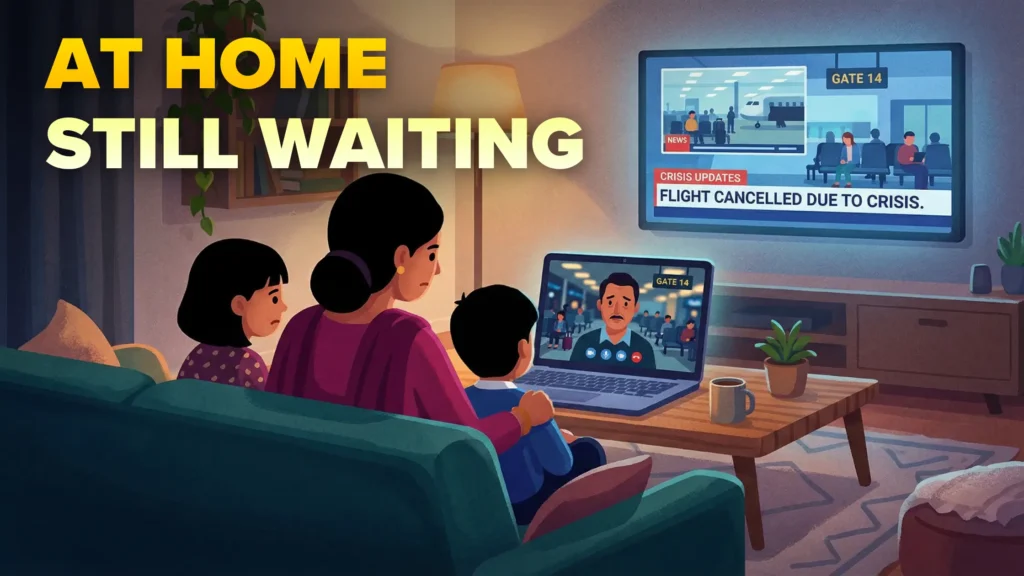
In moments of global crisis, we often focus on the people who are physically caught in the situation — the students, workers, and travellers trying to find their way back home. But there is another group quietly carrying an emotional weight that is just as real – the caregivers at home. The parents refreshing the news late at night. The siblings tracking flight updates. The partners checking their phones for messages. The families trying to sound calm on video calls while their minds are racing with worry.
When someone you love is far away during a time of uncertainty, the waiting can feel deeply personal and the emotional experience of that waiting often goes unnamed.
The Unique Anxiety of Loving Someone From Afar
Caregiving is, at its core, about protection. When someone we love is distressed or in danger, our natural instinct is to move toward them — to help, to fix, to comfort, to create safety. Distance affects that instinct. When your child, partner, sibling, or friend is far away, you may feel a kind of helplessness that is difficult to describe. You want to do something, but there is very little that you can practically control. So the mind begins to fill that gap. This might look like constantly scanning the news, checking your phone repeatedly, imagining different scenarios, or even feeling waves of fear followed by moments of relief. These reactions are your nervous system responding to uncertainty and distance at the same time.
The Quiet Role of “Being the Strong One”
Many caregivers also carry another invisible role — being the emotional anchor. You may feel responsible for staying calm for others in the family. You may try to sound steady on the phone so your loved one abroad doesn’t worry about you. You may be holding your own fear privately while offering reassurance outwardly. This emotional labour often goes unnoticed. But it takes energy to regulate your own anxiety while simultaneously trying to protect someone else from it. Strength, in these moments, doesn’t mean you don’t feel afraid. It simply means you are continuing to care, even when the situation feels uncertain.
When the Mind Tries to Prepare for Everything
Uncertainty can push the brain into problem-solving mode. Caregivers often start thinking several steps ahead: what if this takes longer than expected?, what if something changes suddenly?, what if we can’t reach them?
While this kind of thinking comes from love and concern, it can sometimes keep the nervous system in a constant state of alert. It may help to remember that not every thought that appears in your mind is a prediction. Often, it is simply the brain trying to prepare for possibilities. Recognizing this can create a little breathing space between the thought and the feeling.
Caring for Yourself While You Care for Others
Caregivers often place their own emotional needs at the bottom of the list. However, worry and constant vigilance can quietly take a toll on the mind and body. Taking care of yourself during this time is not selfish. It is what allows you to continue supporting your loved ones in a sustainable way. Some gentle anchors might include limiting how frequently you check distressing news updates, staying connected with friends or family who can support you, allowing yourself to step away from the situation mentally for short periods, talking openly about how you feel instead of carrying it alone. Even small moments of rest for the mind can make a difference.
The Power of Presence, Even Across Distance
One of the hardest parts of caregiving across distance is the feeling that you can’t “do” much. But emotional presence is not insignificant. For instance: a steady voice on the phone, a message that says I’m here, a reminder that someone is waiting for them at home. These gestures matter more than they may appear. In moments of uncertainty, connection itself becomes a form of safety.
If You Are a Caregiver Right Now
If you are sitting at home waiting for someone you love to return safely, know that your experience matters too. These are all expressions of care. And while the situation may feel outside your control, the way you hold space for your loved ones — with patience, hope, and quiet resilience — is meaningful in ways that are often invisible but deeply powerful. Waiting can be one of the hardest forms of care. But it is still care. And sometimes, simply staying present through uncertainty is one of the most loving things we can do.
If this experience feels familiar, you don’t have to carry it alone.
Talking Distance offers free consultation calls where you can explore support at your own pace.