![Logo [with tagline]-38](https://talkingdistance.com/wp-content/uploads/2025/03/Logo-with-tagline-38-300x138.webp)
⏰ Read time : 9 mins
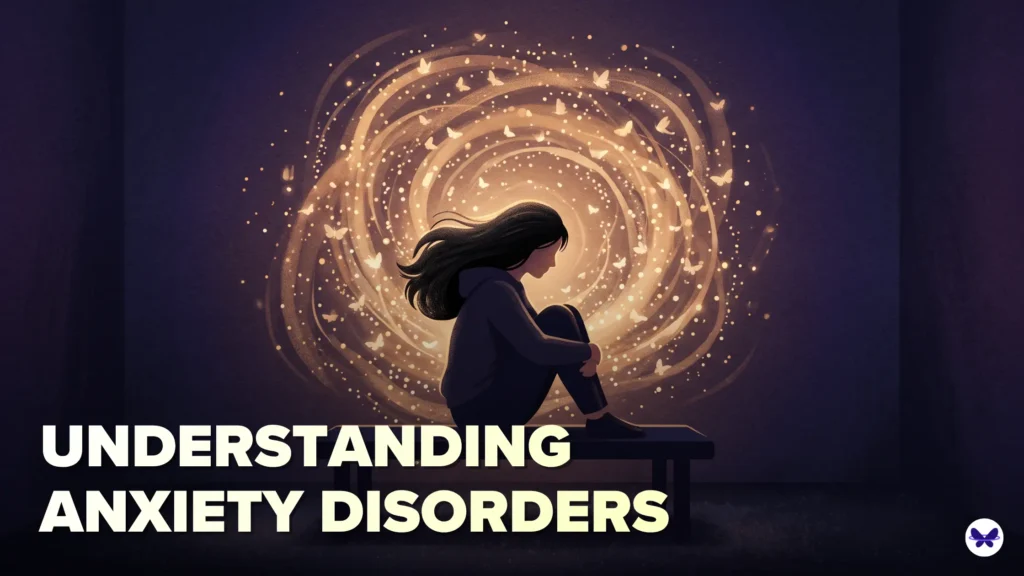
Anxiety is one of the most common emotional experiences people have, yet it is also one of the most misunderstood. Many people automatically associate anxiety with weakness, dysfunction, or illness. In reality, anxiety itself is not inherently harmful or pathological. It is a deeply human response designed to protect us.
At its core, anxiety is anticipation. It is the mind and body attempting to predict possible danger, uncertainty, rejection, embarrassment, loss, or failure before it happens. In healthy amounts, this can actually be adaptive. A person who feels anxious before an exam may prepare more carefully. Someone anxious about driving during heavy rain may become more attentive and cautious. Anxiety often pushes people toward preparation, vigilance, and self-protection.
In many ways, anxiety functions similarly to physical pain. Pain is unpleasant, but it serves an important purpose. If someone touches a hot stove, pain signals danger and encourages them to pull away before serious damage occurs. Anxiety operates in a similar way. It alerts us to potential emotional, social, or physical risks and motivates us to respond.
The difficulty begins when the system becomes excessive, chronic, or disproportionate to the actual situation. What once functioned as protection slowly becomes overprotection. Instead of helping someone navigate life, anxiety begins limiting it.
How Anxiety Manifests
Anxiety is not simply “overthinking.” It affects the entire person physiologically, psychologically, and behaviourally.
The Physiological Experience of Anxiety
When the brain perceives threat, the nervous system activates what is commonly known as the fight, flight, or freeze response. Even when the threat is emotional or psychological rather than physical, the body can respond as though survival is at risk. This is why anxiety can produce symptoms such as a racing heart, chest tightness, sweating, trembling, nausea, dizziness, muscle tension, restlessness, fatigue, and difficulty sleeping. Someone about to speak publicly may notice their hands shaking and their stomach tightening moments before they begin. A person experiencing a panic attack may suddenly feel unable to breathe and become convinced they are having a medical emergency. These sensations can feel deeply frightening, but it is important to understand that anxiety itself is not inherently dangerous. The body is mobilising energy in response to perceived threat, even if that threat is not objectively harmful.
The Psychological Experience of Anxiety
Anxiety also affects how a person thinks, interprets situations, and relates to uncertainty. The anxious mind often becomes preoccupied with possible negative outcomes. Thoughts may become repetitive, catastrophic, or excessively future-focused. A delayed text message may suddenly feel like rejection. A small physical symptom may spiral into fears of serious illness. An upcoming conversation may be mentally rehearsed repeatedly in an attempt to prevent something from going wrong. People experiencing anxiety often describe feeling mentally restless, hypervigilant, emotionally on edge, or unable to “switch off.” The mind becomes organised around predicting and preventing danger, even when no immediate threat exists.
The Behavioural Experience of Anxiety
One of the most significant aspects of anxiety is how it influences behaviour. Many anxious behaviours begin as attempts to reduce discomfort or regain a sense of control. Someone afraid of embarrassment may avoid social gatherings. A person anxious about making mistakes may spend excessive amounts of time perfecting small tasks. Someone who has experienced panic attacks in crowded places may begin avoiding malls, public transport, or unfamiliar environments. Although these behaviours temporarily reduce distress, they often reinforce anxiety over time. Each time a person avoids a feared situation, the nervous system learns that the situation truly was dangerous and that avoidance was necessary for safety. Over time, the fear often becomes stronger rather than weaker.
Anxiety as a State and Anxiety as a Trait
Anxiety can exist both as a temporary emotional state and as a more enduring personality tendency.
State anxiety refers to temporary anxiety that arises in response to a particular situation. Most people experience this form of anxiety at various points in life. Feeling nervous before a job interview, a presentation, or a difficult conversation are all examples of state anxiety. This form of anxiety tends to increase during stressful situations and decrease once the situation has passed. In many cases, it is entirely normal and adaptive.
Trait Anxiety
Trait anxiety refers to a more chronic tendency to experience anxiety across different areas of life. Some individuals seem to have nervous systems that remain persistently alert, even in relatively safe situations. They may constantly anticipate worst-case scenarios, struggle to relax, overanalyse situations, or feel chronically mentally occupied. This does not mean they are weak or irrational. Often, chronic anxiety develops because the nervous system has learned through life experiences, stress, temperament, trauma, or unpredictability that constant vigilance is necessary for safety.
Acute Anxiety and Chronic Anxiety
Acute anxiety is intense and immediate. Panic attacks are one of the clearest examples of acute anxiety. During these moments, the body experiences a sudden surge of physiological activation. The heart races, breathing changes, dizziness may occur, and the person may genuinely believe something catastrophic is happening. Although these episodes are temporary, they can feel overwhelming and terrifying while they are occurring.
Chronic anxiety is often less dramatic but far more exhausting over time. Instead of intense spikes alone, it appears as constant tension, overthinking, irritability, muscle tightness, fatigue, sleep difficulties, and an inability to fully relax.
Many people living with chronic anxiety become so accustomed to functioning in survival mode that they no longer recognise how activated their nervous system has become. Living in a state of constant anticipation can eventually feel normal.
Types of Anxiety Disorders
Generalised Anxiety Disorder
Generalized Anxiety Disorder involves persistent and excessive worry across multiple aspects of life. A person may worry about health, work, finances, relationships, responsibilities, or future events to a degree that becomes mentally and emotionally exhausting. The issue is not simply “thinking too much.” Usually, the mind is attempting to gain certainty and prevent negative outcomes, but the process becomes relentless and unsustainable.
Panic Disorder
Panic Disorder involves recurrent panic attacks and persistent fear about having additional attacks. Many individuals begin organising their lives around preventing another episode from occurring. Over time, they may avoid situations where escape feels difficult or help may not be immediately available. In severe cases, life becomes increasingly restricted by the fear of fear itself.
Specific Phobias
Specific Phobia involves intense fear related to a particular object or situation such as flying, heights, needles, animals, vomiting, or enclosed spaces. Even when someone intellectually understands that the fear is excessive, the nervous system may still react as though genuine danger exists.
Social Anxiety Disorder
Social Anxiety Disorder is often misunderstood as simple shyness, but the two are not the same. Shyness is a personality style characterised by reservation or hesitation in social settings. Social anxiety disorder, however, involves intense fear of judgment, humiliation, rejection, or scrutiny. A person may replay conversations repeatedly afterward, fear appearing awkward, avoid speaking in groups, or experience overwhelming physical anxiety during social interactions. The central fear is often not social interaction itself, but emotional exposure and perceived evaluation.
Treatment and Recovery
Anxiety disorders are highly treatable, and psychotherapy remains one of the most effective and enduring forms of treatment. Approaches such as cognitive behavioural therapy, exposure therapy, acceptance and commitment therapy, mindfulness-based interventions, and other evidence-based methods can help people understand their anxiety patterns, regulate their nervous systems, challenge catastrophic thinking, and reduce avoidance behaviours. Therapy is not about eliminating anxiety entirely. Anxiety is a normal part of being human. The goal is usually to help a person develop a different relationship with anxiety so that fear no longer dictates every decision or limits their ability to live meaningfully.
Medication can also be helpful, particularly when anxiety is severe, chronic, or significantly impairing daily functioning. Selective Serotonin Reuptake Inhibitors, commonly referred to as SSRIs, are among the most frequently prescribed medications for anxiety disorders. Although classified as antidepressants, they are widely used for anxiety because they help regulate systems involved in emotional processing and physiological arousal. These medications are generally considered suitable for long-term management and are not addictive, though they often take several weeks to show noticeable effects. Another class of medication, Benzodiazepine, is often prescribed for acute anxiety or panic attacks because they work quickly to reduce physiological distress. For someone experiencing overwhelming panic, they can provide short-term relief and stabilisation. However, benzodiazepines are generally not recommended as a primary long-term treatment for anxiety disorders. Over time, tolerance and dependence can develop, and these medications may impair memory, concentration, and cognitive functioning. Psychologically, relying exclusively on rapid symptom suppression can also prevent the nervous system from learning that anxiety, although uncomfortable, is survivable. For this reason, they are usually prescribed cautiously and often for short-term or situational use rather than chronic management.
Supporting Someone With Anxiety
Supporting a loved one with anxiety can be emotionally challenging. From the outside, the fears may seem irrational or excessive, but internally they often feel completely real to the person experiencing them.
Many caregivers instinctively try to reduce anxiety through constant reassurance or by helping the person avoid distressing situations. Although understandable, this can sometimes unintentionally reinforce the anxiety cycle over time.
What tends to help more is emotional steadiness rather than constant rescuing. Listening without dismissing, validating feelings without amplifying fear, encouraging gradual coping, and supporting treatment gently can all be meaningful forms of support.
At the same time, caregivers also need to care for themselves. Supporting someone with chronic anxiety can become emotionally exhausting, particularly when the caregiver begins organising their own life around preventing the other person’s distress. Healthy boundaries, rest, emotional support, and self-awareness are essential not only for the caregiver’s wellbeing, but also for maintaining a healthier relational dynamic overall.
Final Reflections
Anxiety is not evidence that someone is weak, dramatic, incapable, or broken. More often, it reflects a nervous system that has become highly practiced at anticipating danger and trying to maintain safety. Healing does not necessarily come from eliminating anxiety entirely. Often, it begins with understanding it differently. When people stop viewing anxiety solely as an enemy and begin recognising it as an overprotective survival system, they can start responding with greater awareness, flexibility, and self-compassion. Anxiety may always remain part of the human experience. But it does not have to determine the size, freedom, or meaning of a person’s life.
You’re not meant to figure it all out alone.
If anxiety has started shrinking your world, making everyday decisions feel exhausting, or leaving you constantly on edge, support is available.
At Talking Distance, our therapists work with people experiencing anxiety, panic, overthinking, perfectionism, and chronic worry using evidence-based, compassionate approaches tailored to each individual.
Book a free consultation to explore whether therapy feels like the right next step. There’s no pressure, just a conversation.
How to Choose a Therapist | Understanding Therapy Approaches
Understanding Bipolar Disorder: Symptoms, Types & Treatment