![Logo [with tagline]-38](https://talkingdistance.com/wp-content/uploads/2025/03/Logo-with-tagline-38-300x138.webp)
⏰ Read time : 10 mins
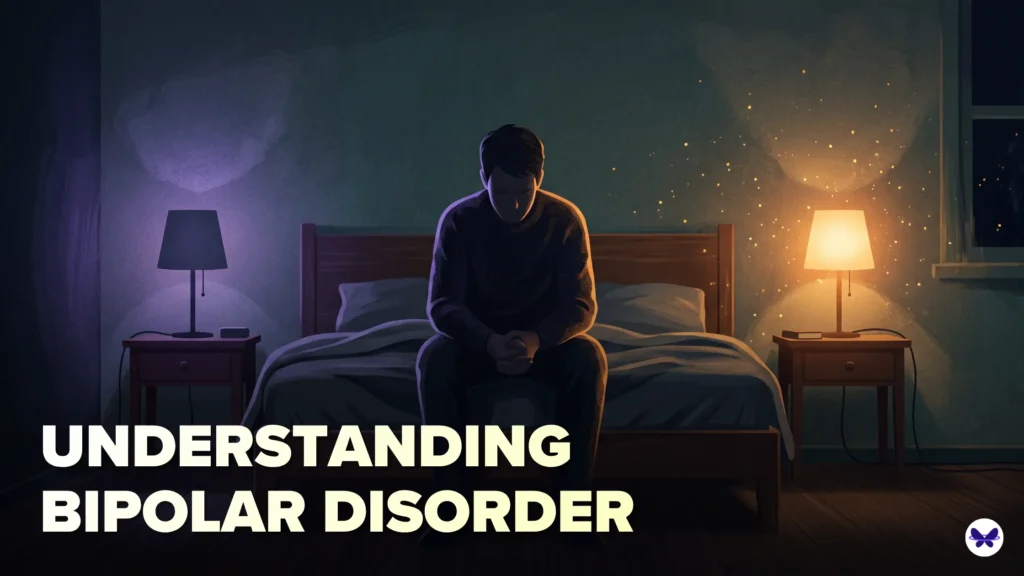
There are moments in life when emotions feel larger than us. A period of sadness that lingers longer than expected. A burst of energy that makes sleep feel unnecessary. Days when the mind races faster than the body can keep up with. For many people, these experiences exist within the normal range of human emotion. But for some, the shifts become more intense, more sustained, and far more disruptive. This is where understanding bipolar disorder becomes important — not for self-diagnosis, but for awareness, recognition, and compassion. Mental health conversations often reduce bipolar disorder to “extreme mood swings,” but the reality is much more layered than that. Bipolar disorder affects energy, thinking patterns, sleep, behaviour, judgment, relationships, and the nervous system itself. While it can feel destabilising, it is also highly treatable, and many people living with bipolar disorder go on to lead deeply meaningful, stable, connected, and fulfilling lives with the right support. This blog is meant to create understanding rather than labels.
What Is Bipolar Disorder?
Bipolar Disorder is a mood disorder characterised by episodes of mania or hypomania along with episodes of depression. The term “bipolar” refers to these two emotional poles. These are not ordinary emotional highs and lows. They are mood episodes that significantly alter a person’s energy, behaviour, perception, and functioning. Someone with bipolar disorder may experience periods where they feel unusually energised, driven, restless, impulsive, euphoric, or irritable, followed by periods marked by exhaustion, hopelessness, slowed thinking, and emotional heaviness. One of the confusing aspects of bipolar disorder is that many people function very well between episodes. During periods of stability, they may appear entirely like themselves again, which can make the condition difficult to recognise both for the individual and the people around them. Bipolar disorder also tends to begin relatively early in life, often emerging in late adolescence or early adulthood.
Understanding Mania
Mania is often misunderstood because it is associated with an elevated mood. People sometimes imagine it as simply feeling extremely happy, confident, or productive. But mania is not just happiness intensified. At its core, mania is a sustained increase in energy. For some individuals, this increase in energy feels euphoric. They may feel unstoppable, intensely motivated, unusually confident, highly social, or exceptionally productive. However, a sizeable number of people experience this same energy very differently. Instead of euphoria, it may show up as irritability, agitation, hostility, emotional explosiveness, or restlessness. Some people alternate between euphoria and irritability depending on their circumstances. This distinction matters because mania is not inherently positive simply because it may initially feel energising or pleasurable. The difficulty lies in the fact that the brain’s ability to regulate itself becomes impaired during these episodes.
A useful way to think about mania is to imagine driving a car with no brakes. At first, the speed may feel thrilling. There may even be a sense of power or invincibility. But eventually, the inability to slow down becomes dangerous. This is often what happens during mania. The heightened energy is accompanied by changes in thinking and behaviour that can lead to serious consequences emotionally, financially, socially, professionally, or physically.
According to the DSM, a person must experience an elevated or irritable mood along with several accompanying symptoms for at least one week for it to qualify as mania. If the mood is euphoric or elevated, at least three additional symptoms are required. If the mood is primarily irritable, at least four symptoms are needed because irritability alone is less specific to mania than euphoria. One of these symptoms must involve increased activity or energy.
One of the most noticeable changes during mania is an increase in goal-directed activity. A person may suddenly become intensely driven, taking on multiple projects, making huge life plans overnight, becoming consumed by work, or feeling unable to stop doing things. Initially, this can even appear admirable or impressive to others, but over time the activity often becomes unrealistic, chaotic, or unsustainable. Another hallmark feature is a reduced need for sleep. This is different from insomnia. Someone experiencing mania may sleep only two or three hours and still feel completely energised. They often do not feel tired in the way most people would after severe sleep deprivation. Talkativeness also increases significantly. Speech may become rapid, loud, difficult to interrupt, or pressured. Conversations can feel overwhelming because the person’s mind is moving faster than they can organise their thoughts. This leads into what clinicians refer to as “flight of ideas,” which describes the process of thinking during mania. Thoughts move rapidly from one idea to another, often making conversations difficult to follow because the mind is racing ahead. Another common feature is grandiosity, which relates to the content of thoughts rather than the speed of them. A person may develop an exaggerated sense of their abilities, intelligence, importance, or destiny. They may genuinely believe they cannot fail or that they possess extraordinary insight. Confidence itself is not unhealthy, but grandiosity becomes concerning when judgment becomes detached from reality. Distractibility also becomes prominent. Attention may become fragmented because every thought, sound, or stimulus suddenly feels equally important. Impulsivity is often where the most serious consequences emerge. During mania, a person may spend excessive amounts of money, drive recklessly, make risky investments, engage in unsafe sexual behaviour, abruptly quit jobs, misuse substances, or make major life decisions without considering long-term consequences. These behaviours are usually driven by momentum, urgency, and impaired judgment rather than careful reflection.
Why Mania Can Be Dangerous Even When It Feels Good
One of the challenges with bipolar disorder is that mania does not always feel distressing while it is happening. In fact, some people describe feeling more alive, creative, confident, connected, or productive than ever before. This can make seeking help particularly difficult because the experience may initially feel rewarding rather than alarming. But the danger of mania lies in the loss of regulation and insight that often accompanies it. Even when the state feels pleasurable, it can still lead to emotional, relational, financial, or physical consequences that become apparent later. And just as a speeding car without brakes eventually crashes, manic episodes are frequently followed by depressive episodes.
Understanding Depression in Bipolar Disorder
The depressive episodes seen in bipolar disorder are clinically very similar to those seen in unipolar depression. During these periods, a person may experience persistent sadness, emotional numbness, hopelessness, exhaustion, slowed thinking, feelings of worthlessness, sleep disturbances, changes in appetite, difficulty concentrating, or suicidal thoughts. Functioning often becomes significantly impaired during depressive episodes. Tasks that once felt simple may suddenly feel impossible. Getting out of bed, responding to messages, completing work, showering, or making decisions can begin to feel overwhelming. The contrast between mania and depression can feel deeply disorienting for the person experiencing it. Someone who recently felt intensely energised and invincible may suddenly feel emotionally depleted and unable to function.
What Makes Bipolar Disorder Different From Ordinary Mood Changes?
Everyone experiences emotional fluctuations, but bipolar disorder involves changes that are more intense, longer-lasting, and significantly impairing. These episodes affect not only emotions but also energy, sleep, thinking, behaviour, and overall functioning. Mood episodes in bipolar disorder also tend to last relatively longer than ordinary emotional reactions. The condition is highly recurrent, meaning episodes tend to return over time rather than occurring only once. This does not mean a person is destined to remain unstable forever. It simply means that many individuals benefit from long-term monitoring and treatment in order to maintain stability and reduce relapse risk. If left untreated, manic episodes can last anywhere from three to six months. With treatment, symptoms may improve within days or weeks.
Types of Bipolar Disorder
Bipolar I Disorder involves at least one full manic episode. Depressive episodes are common, although they are not technically required for diagnosis. Mania in Bipolar I can become severe enough to significantly impair functioning, require hospitalisation, or involve psychotic symptoms.
Bipolar II Disorder involves episodes of depression along with episodes of hypomania. Hypomania is a milder form of mania where the person experiences elevated energy and activation, but the symptoms are less severe and do not reach the intensity of full mania. Many individuals with Bipolar II spend far more time struggling with depression than hypomania.
Cyclothymic Disorder involves chronic fluctuations between milder depressive and hypomanic symptoms over long periods of time. While the symptoms may not fully meet criteria for major depressive or manic episodes, the instability can still significantly affect relationships, self-esteem, and quality of life.
Mixed States: When Mania and Depression Happen Together
One of the most distressing experiences in bipolar disorder is a mixed state, where symptoms of depression and mania occur simultaneously. A person may feel hopeless, emotionally overwhelmed, or suicidal while also experiencing racing thoughts, agitation, restlessness, and intense energy. This combination can be particularly dangerous because emotional despair exists alongside the energy and impulsivity to act on distressing thoughts. Mixed states are often misunderstood because they do not fit neatly into stereotypical ideas of either depression or mania alone.
Bipolar Disorder With Psychotic Symptoms
In severe episodes, some individuals may experience psychotic symptoms such as delusions, hallucinations, or a profound disconnection from reality. During mania, someone may believe they possess extraordinary powers, wealth, intelligence, or importance. During depressive episodes, psychotic symptoms may revolve around guilt, worthlessness, catastrophe, or hopelessness. Psychosis does not mean someone is “crazy.” It means the brain is temporarily struggling to accurately interpret reality during an intense mood episode.
Why Medication Matters
One of the most important things to understand about bipolar disorder is that therapy alone is generally not considered sufficient treatment. This is not because therapy lacks value. Therapy can help people recognise warning signs, improve routines, strengthen relationships, process shame, manage stress, and develop healthier coping strategies. However, bipolar disorder also involves significant biological and neurological dysregulation. Medication helps stabilise the nervous system and mood regulation mechanisms in ways that therapy alone often cannot. This is why the standard of care for bipolar disorder usually involves medication alongside therapy.
The medications most commonly used in bipolar disorder are known as mood stabilisers. Lithium is the oldest and one of the most effective mood stabilisers available. It can help treat mania while also preventing future manic and depressive episodes. It is also one of the few psychiatric medications shown to reduce suicide risk. Certain anticonvulsant medications originally developed to treat seizures can also function as mood stabilisers. Valproic Acid and Carbamazepine are particularly useful for treating mania but are not very effective for bipolar depression. Lamotrigine, on the other hand, is helpful for preventing depressive episodes but does very little for mania.
Antipsychotic medications are also highly effective for bipolar disorder. Although many people associate these medications only with psychotic disorders such as schizophrenia, they are frequently used in bipolar disorder as well. In fact, antipsychotics often work faster than traditional mood stabilisers for acute mania and are commonly used when urgent treatment is required. Many antipsychotic medications can effectively treat mania. However, only a smaller number are proven to help with bipolar depression. These include Quetiapine, Lurasidone, Olanzapine, and Cariprazine.
Traditional antidepressants do not always work well for bipolar depression in the same way they do for unipolar depression. In some individuals, they may actually worsen mood instability and increase the rate at which a person cycles between depression and mania. This does not mean antidepressants are never useful in bipolar disorder. Some individuals do benefit from them. However, they are usually not considered a first-line treatment because stabilising the overall mood system is generally more important than treating only one emotional pole.
At times, manic episodes can become severe enough that hospitalisation is necessary. This may be needed to restore sleep, ensure safety, stabilise medications, reduce impulsive behaviour, treat psychosis, or prevent harm. Hospitalisation is not a sign of failure. In many cases, it is the safest and most compassionate form of care during an acute episode.
For Caregivers: Supporting Someone With Bipolar Disorder
Loving someone with bipolar disorder can be deeply meaningful, but it can also become emotionally exhausting. During episodes, you may witness behaviours that feel confusing, frightening, painful, or entirely unlike the person you know. Learning to recognise early warning signs can make a significant difference. Changes in sleep, energy, speech, irritability, spending habits, or activity levels may indicate that an episode is beginning to emerge. Early intervention often improves outcomes considerably. It is also important to understand that logic alone rarely interrupts mania. Arguing intensely with someone in a manic state often increases conflict rather than insight. Focusing on calm communication, safety, reducing stimulation, and encouraging professional support tends to be more effective. Consistency is especially important in bipolar disorder. Stable sleep routines, regular meals, medication adherence, and stress management can all play a protective role in maintaining emotional stability. At the same time, caregivers also need care. Supporting someone with a chronic mental health condition can lead to burnout, resentment, emotional exhaustion, or helplessness if your own needs are continuously neglected. You are allowed to set boundaries, seek therapy, ask for help, rest, and protect your own mental health too.
A Final Reflection
Bipolar disorder is often portrayed through extremes — instability, unpredictability, chaos. But many people living with bipolar disorder are also deeply insightful, creative, emotionally intelligent, sensitive, resilient, and capable of extraordinary growth. The goal of treatment is not to erase emotion or personality. It is to create enough stability that a person can live with greater safety, clarity, freedom, and choice. Awareness matters because early recognition changes outcomes. Support matters because shame often delays treatment. And compassion matters because behind every diagnosis is a person trying to make sense of their own mind.
If parts of this article resonated with you, let that be an invitation toward understanding rather than self-diagnosis. Mental health conditions are nuanced, and only a qualified professional can determine what may truly be happening. But understanding is often where healing begins.
Understanding is often the first step.
If you or someone you care about has been experiencing intense shifts in mood, energy, or daily functioning, you don’t have to make sense of it alone.
At Talking Distance, our therapists provide compassionate, evidence-based support for people navigating mood disorders, emotional difficulties, and life’s challenges.
Book a free consultation to explore whether therapy feels like the right next step. There’s no pressure, just a conversation.
How to Choose a Therapist | Understanding Therapy Approaches
Anxiety Disorders Explained: Symptoms, Types, Causes & Treatment